
Henley-logo-1-Jun-13-2023-06-29-02-5808-AM.png)


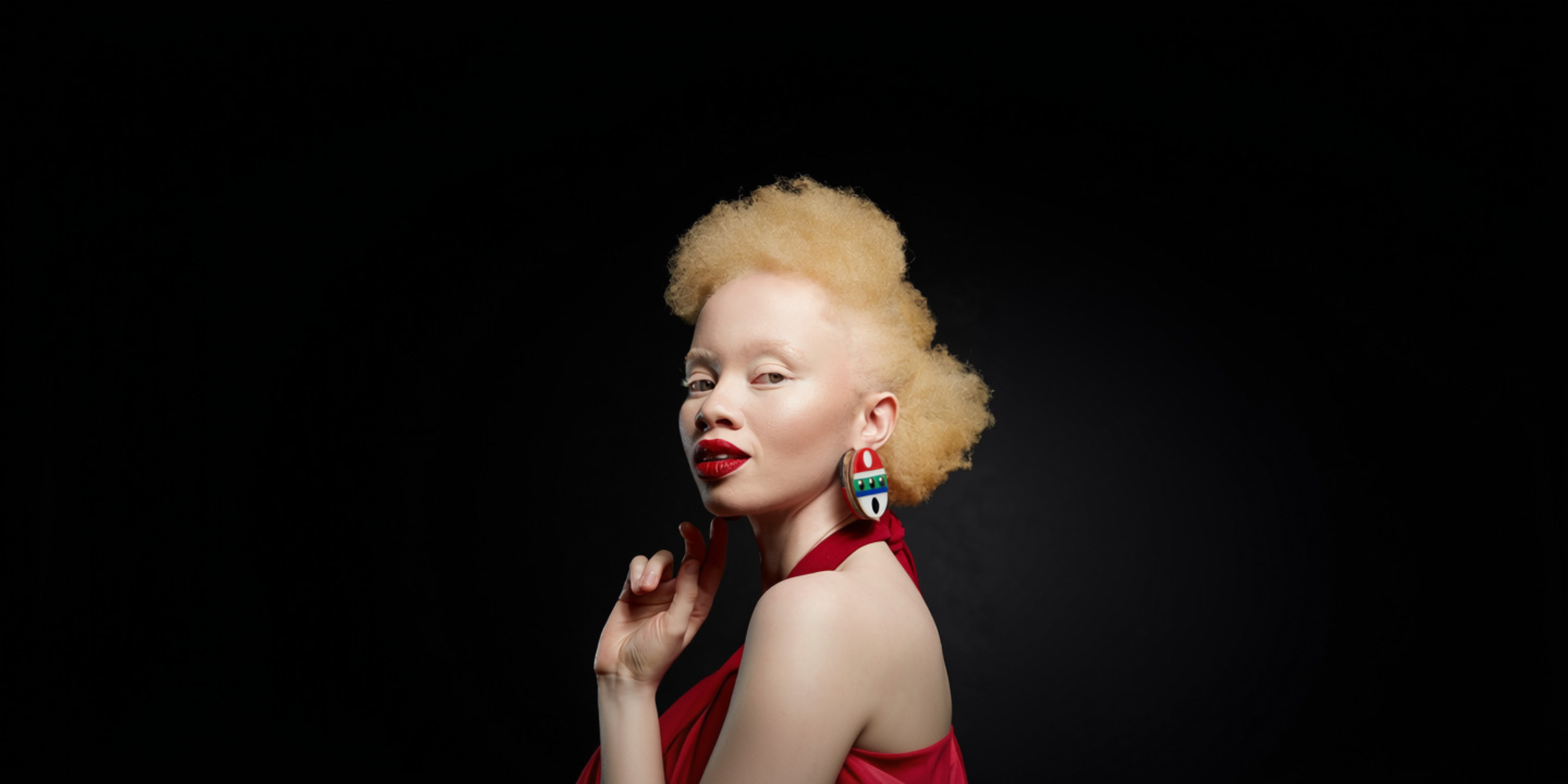
Before she was a model and Vogue cover story, Thando Hopa spent her working hours in front of a magistrate, building cases. For four years she worked at the National Prosecuting Authority (NPA), starting out in district court before moving to regional court, where she specialised in sexual offences. It was serious, demanding work – the kind that requires you to hold together legal precision and deep human empathy at the same time.
‘My legal training shaped how I approach argument and policy,’ she says. That framing tells you something significant about Thando. She doesn’t talk about her time as a prosecutor the way someone who had wandered off course might. She talks about it as a foundation.
When Thando left the NPA it wasn’t for the runway – at least not at first. She left because she needed to figure out who she was outside of the role she had stepped into straight after university. ‘I took time out to find myself,’ she says simply. That pause, deliberate and necessary, would end up changing everything.
The model
Posing for a camera was never on Thando’s radar. It happened almost by accident. In 2012, while she was still working at the NPA, local fashion designer Gert-Johan Coetzee spotted her in a shopping mall. The encounter was brief and, by Thando’s own account, unremarkable in the way that pivotal moments often are before you know they’re pivotal. What drew her in was not the lure of being seen, but the possibility of changing how people with albinism were seen. Albinism had long carried a sustained, negative and reductive representational presence, and Thando recognised in media a negotiating medium through which to challenge those perceptions. The decision took convincing – her sister urged her on – because modelling was something she had never been keen on. ‘I can’t speak for Gert-Johan on what he saw,’ she says, ’but I can speak for myself on what I wanted to achieve.’
But modelling gradually began to take up more space. And with it came a visibility she has spent years learning to use intentionally.
In 2019, Thando became the first woman with albinism to appear on the cover of Vogue. It was a milestone that reverberated far beyond fashion circles and opened doors – including a fellowship with the World Economic Forum. It also served as a launchpad for her albinism activism, bringing her work to a global audience.
Thando is careful about what she calls the double edge of being a ‘first’. Recording ‘firsts’ matters, she argues, because they document exclusion and representational change – without them, people can later assume there was never a barrier. But an individual can become reduced to being ‘the first’ if that’s all people remember. The solution, she suggests, is not to erase the first but to place it in its proper historical context – visibility in the form of providing context, not simply enhancing reach. A single first, she argues, is not normalisation. Normalisation requires critical mass – enough people, enough images, enough stories – so that one person isn’t carrying the weight of an entire community’s representation on their own.
It’s a distinction worth sitting with. The Vogue cover was significant. It was also, in her own words, not enough on its own.
The activist
Thando was born with albinism. Growing up, that meant navigating name-calling, superstition, and a particular kind of social exclusion that can be hard to articulate to those who haven’t experienced it. ‘Albinism also causes legal blindness – a practical reality that shapes daily life in ways many people don’t consider.’
She has taken her lived experience and built an advocacy practice around it. She currently serves as Vice-Chair and Head of the Finance Committee at the African Albinism Network. She has contributed to United Nations policy discussions and helped develop an action plan on the rights of persons with albinism. She has also spoken publicly about the importance of language – pushing for the adoption of respectful terminology and the reform of derogatory indigenous terms used to describe people with albinism.
Her modelling, then, is less about fashion and more about showing up. Every image in which she appears is a small act of counter-narrative – a push back against the idea that people with albinism are defined by their condition or by the myths that surround it. ‘You are enough,’ she says – not to a particular group, but to anyone trying to survive an environment that’s hostile or who experiences cultural devaluation for their mere existence. ‘You are beautiful and capable. Cultivate that sense of worthiness – that is your mantra.’
Since around 2020, Thando has been running diversity, equity and inclusion (DEI) workshops and consulting work, helping organisations translate the politics of identity into practical frameworks. Her legal background gives her a useful edge here – she knows how to structure an argument, how to move an idea from principle to policy. Her lived experience gives her something harder to teach: credibility that can’t be manufactured.
The MBA student
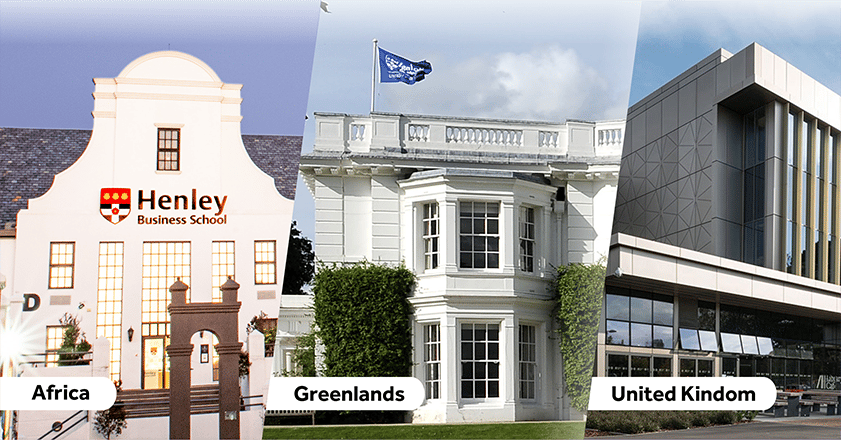
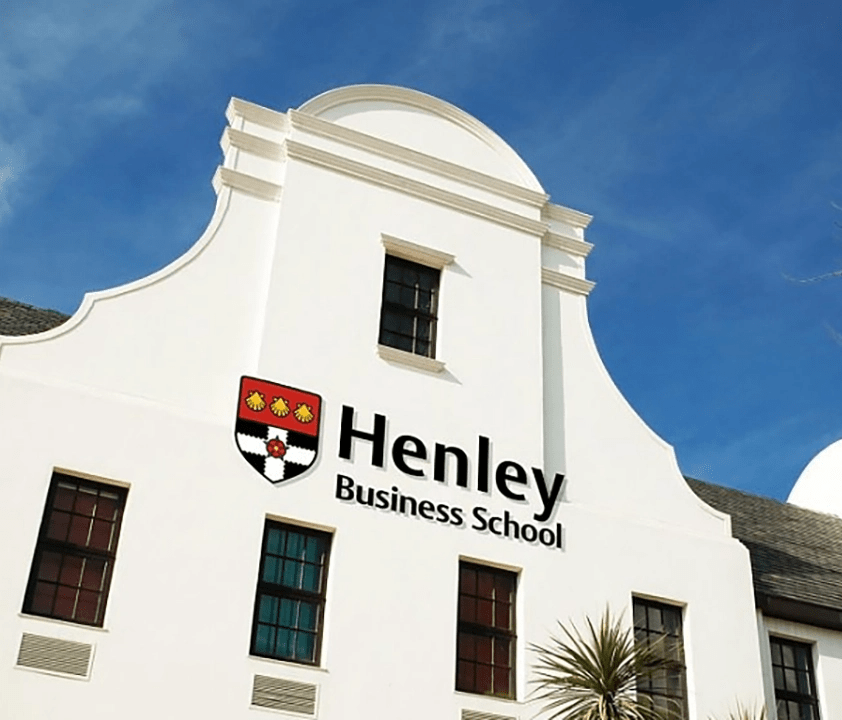
Thando’s consulting work sits alongside her studies at Henley Business School Africa, where she is completing a Flexible Executive MBA. She describes it as a learning journey that has given her new frameworks – systems thinking, feedback loops, control – and the confidence to step into spaces she might not previously have claimed.
The MBA is not a departure from her activism, she says. It’s an extension of it. ‘You need to understand the system you function under,’ she says, ’to better diagnose the problem and incorporate meaningful change.’
When asked what advice she would give her 20-year-old self, Thando doesn’t hesitate: ‘Protect your optimism,’ she says.
It’s an instruction that carries weight when you consider her path thus far: a prosecutor who stepped back to find herself, was discovered in a shopping mall, landed up on the cover of Vogue, and turned all of that into a platform for policy change, corporate transformation, and community advocacy – while picking up a Henley MBA along the way.
Thando Hopa has never really been about any one thing. The modelling got people’s attention, but what she’s doing with that attention is the real story.