





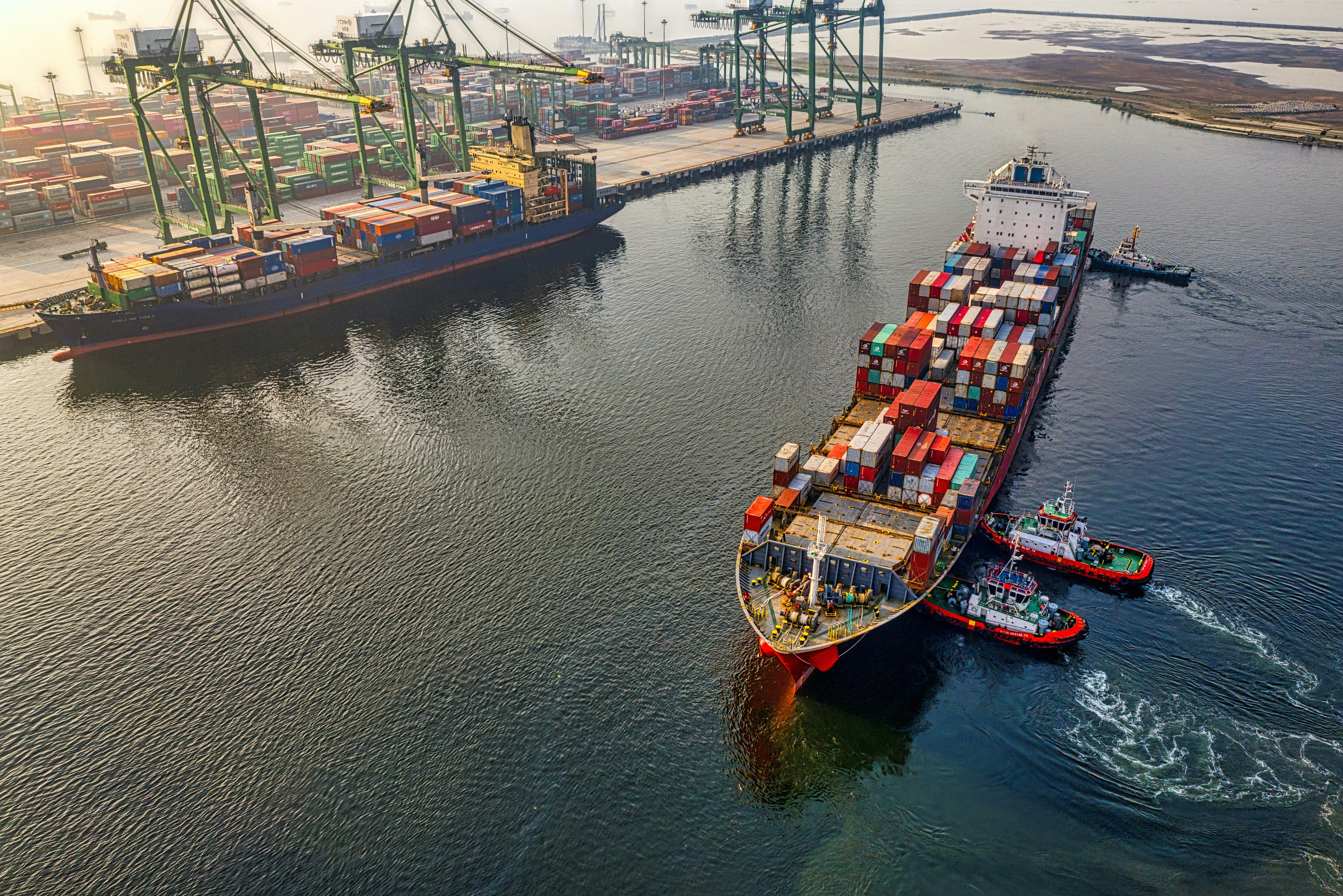
Photo by william william on Unsplash
Recent global forums, from Davos to Munich, highlighted the same thing: the global order is unravelling.
The historic US-Europe axis that once anchored the global economy is faltering, courtesy of a volatile second Trump presidency. The erosion of US soft power – due in part to the shutdown of USAID – has left room for major players, such as China, to cement influence over certain regions, particularly Africa. And in the meantime, war in Eastern Europe and instability in the Middle East continue to trigger shocks in the global supply chain.
For advanced economies, these disruptions are incredibly costly, causing firms in the US and Europe to lose an average of 6 - 10% of their annual revenues. But for the Global South, they’re even more destabilising.
According to a report by DP World, 83% of firms in sub-Saharan Africa lose over a month of operational time because of supply chain disruptions. In the MENA region, that number sits at 72%; in the Gulf Cooperation Council, 61%.
“In contrast, only 50% of North American firms, 41% in Germany and 36% in the UK face similar losses,” the report says.
The conclusion is clear: these disruptions hit the Global South harder. As the older order falls away and something new takes its place, these shocks will only worsen.
The Global South needs systems in place that either reduce exposure to risk or absorb shocks more effectively. Here’s what can be done.
They attack, we bloc
Becoming a part of one of the two major blocs that are forming could be an attractive safety net for Global South countries, but joining in is not without its drawbacks.
There is the US-dominated bloc that includes the Donroe Doctrine countries – Venezuela, Mexico, Canada and others across the Americas. Then there is the China-dominated bloc, containing countries such as Myanmar, Vietnam and the BRICS countries.
The majority of Global South countries sit in a third, unaligned group. Joining one of the two blocs can provide security and capital, but member states are subject to the whims of the patron states. There is also no guarantee that joining is an option. States can only do so if deemed strategically or economically important. For many countries – particularly those in Africa – that are neither “strategically or economically important” might mean they will only be ‘feeder’ nations, supplying the bigger players with raw materials.
Remaining unaligned is an option, but it also risks marginalisation. The Global South needs access to global value chains in order to grow, and so joining a bloc in one form or another may be the most pragmatic option, although vying to join (and to remain) is at the whim of the patron state. Even if one gets to join , smaller nations or entire continents only act as proxies in a bigger game.
It isn’t fair. Which is why the Global South must turn to other solutions.
From fragmentation to integration
Regional cooperation is the only practical umbrella solution. It’s critical for vulnerable Global South players because it reduces the impact of external shocks, grows GDP, improves efficiency, and boosts resilience.
Perhaps the best example of it is that stalwart of the Global North: the European Union. Granted, the EU occupies a far smaller landmass than the entire Global South, but the benefits from its deep integration are clear: greater market access for businesses, a frictionless single market, and regional support in the face of crises.
For the Global South, this is a must. The question is: How can it be done?
One solution, already underway in Africa, is the African Continental Free Trade Agreement (AfCFTA). According to the World Bank, AfCFTA paves the way for the continent to lift over 30 million people out of extreme poverty, enhance wages, and boost Africa’s income by $450 billion by 2035.
But five years since its inception, AfCFTA has struggled to meet expectations because of infrastructural shortcomings and a lack of enabling policy. Genuine regional cooperation means putting aside politics and working sincerely toward the greater good.
Tech and skills can shield us from shock
In the meantime, there are things that can help the Global South insulate itself against the shocks. A recent research paper by the Marondera University of Agricultural Sciences and Technology found that “the absence of local production capacity and technological limitations [are] critical barriers to effective resilience, distinguishing Africa’s experience from other regions.”
The same paper posited that, during times of supply chain volatility that result from the Russia-Ukraine conflict, the organisations with digital and technological know-how managed best.
The Global South is disproportionately affected by supply chain swings. Africa has the lowest digital penetration in the world. By sharing knowledge and technology, countries can help others build resilience. It’s fundamental. Global cuts to official development assistance (ODA) highlight that the Global South is now on its own.
A final necessity is upskilling local talent.
The Global South has a far younger median age than its counterpart in the North, with the average age in Africa just 19 years. But the region hasn’t yet capitalised on this resource; true self-sustainability is held back by a workforce lacking in skills. The so-called ‘demographic dividend’ is only an engine of growth if it is armed with the appropriate skills needed in the 21st century. A Large unemployed and under-skilled youthful population can quickly become a ‘demographic curse’.
Filling the gaps left by a shrinking global value chain means realigning education systems with regional and industry needs. Boosting talent in local manufacturing, logistics, engineering and technology at the very least is a must.
Surviving in a post-hyper-globalisation world will require strategy and determination. A first step must be to reduce dependence on unstable global value chains and enhance regional collaboration to improve the Global South’s prospects. A region with such vast human and mineral resources shouldn’t be just a plaything for the bigger powers, but a decision-maker in and driver of its own fate.
Prof Rajneesh Narula is director of the Dunning Africa Centre at Henley Business School Africa and John H Dunning chair of international business regulation at Henley Business School, University of Reading
This article was originally published in Business Day.