Henley-logo-1-Jun-13-2023-06-29-02-5808-AM.png)


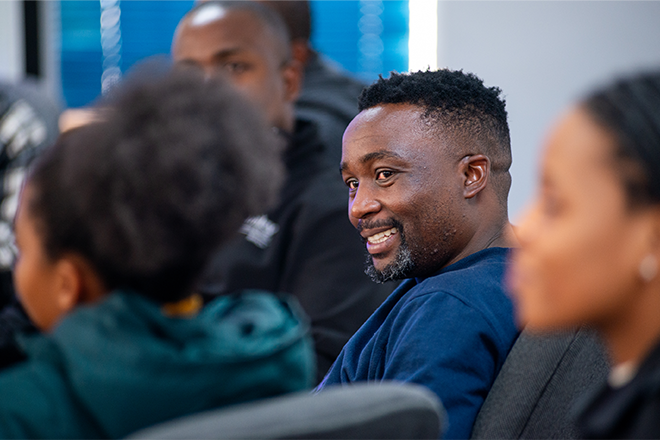


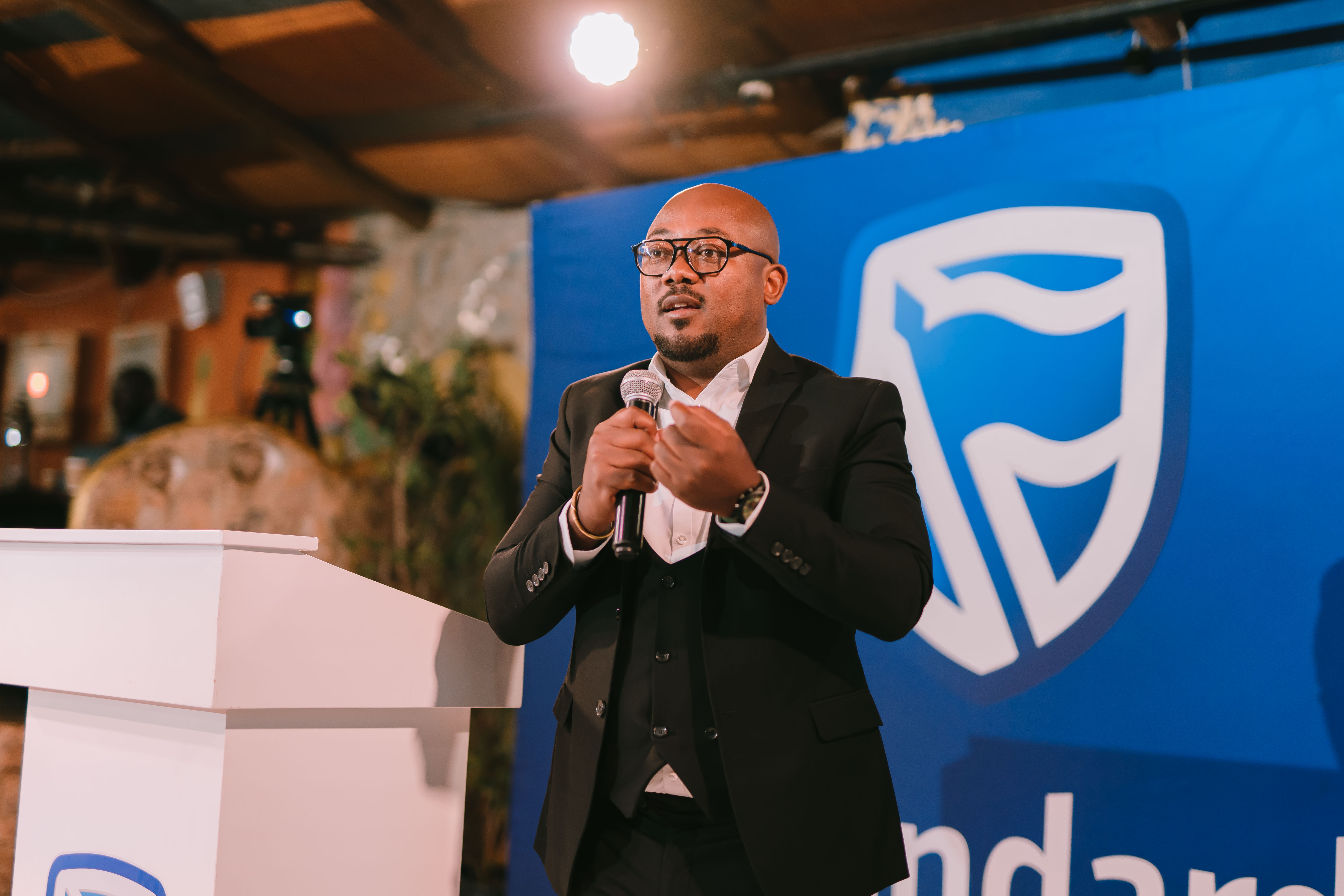
Born in KwaZulu-Natal and raised by his grandmother (he lost both parents before he turned 15), proudly Zulu Siduduzo Ntshangase arrived in Johannesburg in 1998 with little more than a teenager’s determination and an aunt’s fear that without a male figure, he would be lost.
Today, as a proposition and enterprise development specialist at Standard Bank covering 14 African markets, Siduduzo designs financial solutions for the continent’s most complex operating environments – and he credits Henley Business School with giving him the blueprints to think bigger, argue better, and lead with conviction. His motto? ‘It can be,’ he says. And he means it.
This is Siduduzo’s story, in his own words.
Sometimes the detour is the destination. In 1998, my aunt brought me to Johannesburg, worried that I would go off the rails. One day I boarded a taxi, fell asleep, and woke up in Pretoria – an accidental arrival. I enrolled in a business programme with Pretoria Technikon which was good while it lasted – and then the funding ran out. I was young and I needed to work.
Necessity, it turns out, is a very effective teacher and I entered the world of banking in 2007 at Standard Bank as a customer consultant. The next year I moved to Liberty where I won Financial Planner of the Year for two years running. That changed how I saw myself. It was evidence that I have what it takes to compete, that I belonged in rooms I had once thought were closed to me. I returned to Standard Bank in 2010 and the real work began.
When I decided to study business the plan was to go to UCT – then I met Henley’s Mamodise Mailula at a roadshow. She encouraged me to do the Postgraduate Diploma in Management Practice (PGDip) … I thought about it for five minutes, then I said yes, and it has proved to be the best decision I could have made.
The Personal Mastery class with Dr Zondré Keevy gave me my marriage back. In 2021, my relationship came close to breaking down. In Zulu culture, there are expectations about how a husband should show up. I thought I understood those expectations, but I was wrong. Personality typologies helped me understand myself and my wife better and I believe it ultimately improved my relationship.
Personal mastery also helped me understand that different is not necessarily wrong, especially where management style is concerned. At the time I worked with a manager with whom I clashed – She is a perfectionist and detail-oriented, which I am not. After the Personal Mastery block, I had an honest conversation with my manager, and I told her what I had come to understand about difference. That conversation changed the relationship and changed the way I lead.
Henley has given me more than theory; it’s given me the courage to make my voice heard. The PGDip finance module resolved a long-standing insecurity I had about income statements and balance sheets when one lecturer gave an analogy that made everything click. I walked out of that lecture feeling elated. The AI module empowered me to make a recommendation at work around commercial vendor solutions that was taken seriously and proved to be the right call.
My life motto is summed up in three short words: ‘It can be’. They sound simple because they are simple. They mean you are the one in charge. They mean the noise does not matter. They mean that it is possible – even when no one else believes it, even when you are the only person in the room who thinks it can be done. It can be. That is what this life has taught me. And that is what I want to pass on.
5 QUICK-FIRE QUESTIONS
1. If you could have coffee with your pre-Henley self, what would you say?
I would say: stop waiting for permission. You are already enough. The thing you are afraid to say in the boardroom – say it. The thing you are afraid to try – try it. Henley did not teach me how to be brilliant. It taught me how to stop apologising for being brilliant. I spent years dimming myself to fit rooms I was never meant to shrink into. Pre-Henley me needed to hear that he did not need to wait for someone to open the door. He could open it himself. It can be.
2. You have 24 hours, unlimited resources, and one global problem to solve. What do you tackle?
Financial inclusion at the last mile. Not the last kilometre – the last mile. The person in a rural district who has a phone but not a bank account. The small business owner who cannot access credit because the system was not designed for them. I have spent 15 years in banking and six years across 14 African markets, and I have seen what the absence of that last mile costs. It costs dreams. It costs businesses. It costs dignity. If I had 24 hours and unlimited resources, I would spend them designing the architecture of access – and then hand the keys to the people who need them most.
3. What is the most important lesson a classmate at Henley has taught you?
That silence is not absence – it is processing. I am an extrovert. I talk to think. In one of the modules, a classmate – an introvert, a quiet and deliberate thinker – said something in a debrief that reframed my entire understanding of a case. She had been quiet the whole session. I had assumed she was disengaged. She was not. She was listening at a frequency I could not hear. That taught me to stop measuring people by my own barometer. Different people show up differently. That does not make them ‘less’. I think about that every time I am in a room now.
4. Ten years from now, what do you want a Google search about you to say?
I want it to say something about impact at scale. Not awards – because I have had those. Not titles – they come and go. I want it to say: he built something that lasted. He helped people who were invisible become visible to the systems that should have been serving them all along. I want a young person in Lusaka or Nairobi to Google my name and find a story that tells them: you do not need to come from money. You do not need the perfect matric results. You do not need anyone to open the door for you. It can be.
5. What emerging technology or trend are you betting your career on?
Agentic AI – AI systems that act, that execute, that take a task and run with it end-to-end. Not chatbots that hold a conversation. Agents that do the work. I have already been in rooms where I argued for open-source agent models to be tested before commercial solutions are purchased. I believe the institutions that figure out how to deploy agentic AI responsibly and at scale will have a competitive advantage for the next 20 years.